10 questions about Lapsang Souchong smoked tea
1- What is Lapsang Souchong?
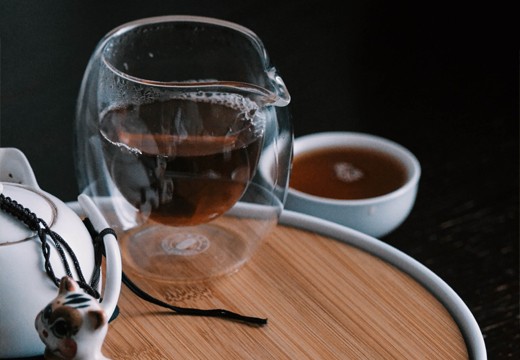
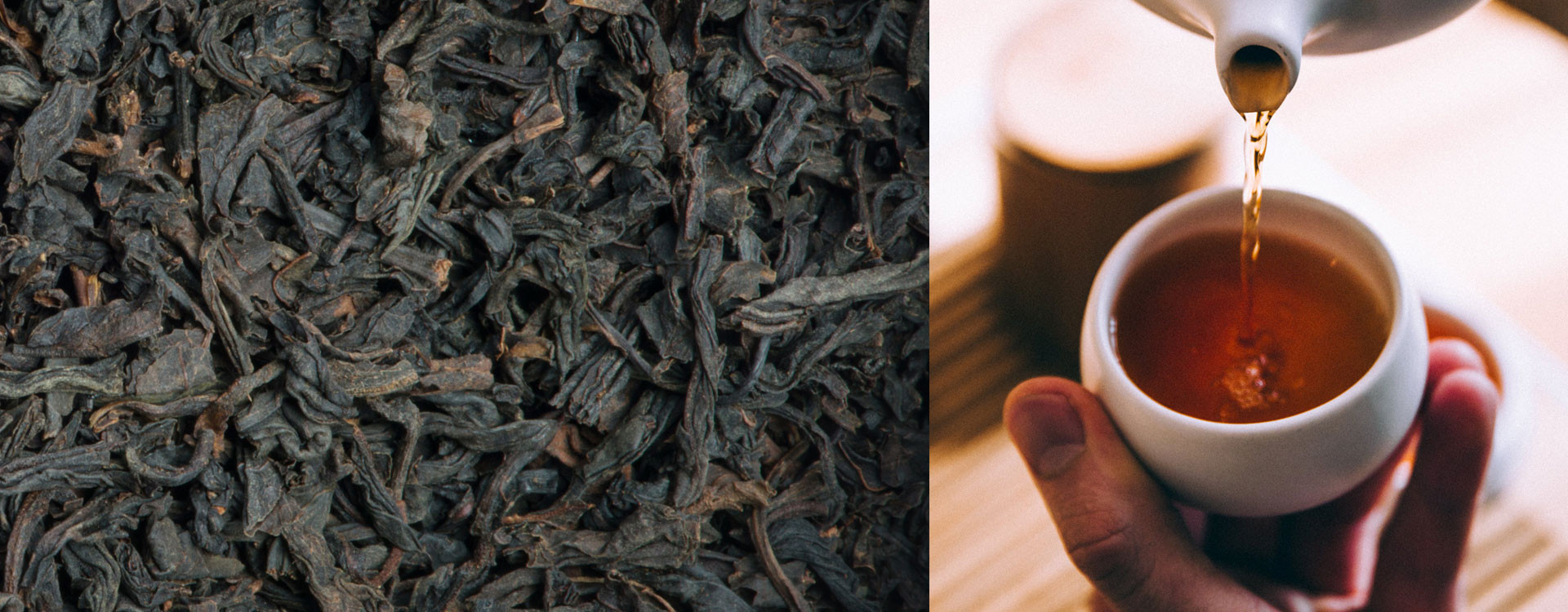
Lapsang Souchong is a black tea that, once harvested, is smoked over a pine wood fire to give it a very special woody and smoky flavor. This category is also called "smoked teas" or "Zheng Shan Xiao Zhong". Once served, this type of tea has a particularly beautiful reddish color.
2- Where does Lapsang Souchong come from?
Invented in the Fujian province, in south-east China, the Lapsang Souchong tea recipe dates back to the 18th century. Phonetically translated from a Chinese word, Lapsang Souchong means "small leaves from the original mountain", and was is the first black tea in China, which until then only produced green tea.
It is said that its invention was actually unintentional. Forced by an army—or bandits, depending on who is telling the legend—to flee their village during tea harvesting season, villagers from Fuji found their tea completely oxidized when they returned. The oxidation process is what defines the final "color" of the tea. In order to avoid losing the harvested tea leaves, the villagers decided to dry them as fast as possible. That’s when they had the idea to smoke it with the wood of a local conifer. Later bought by Dutch traders to Europe, this tea was met with great success against all odds, and that is when Lapsang Souchong tea was born.

Tea fields in South-East China
3- What does Lapsang Souchong taste like?
The flavors of the black tea leaf itself are secondary in Lapsang Souchong which is considered a tea without astringency and very little bitterness. The most present note is unquestionably that of wood fire, smoke, even tar, and some can even distinguish a taste of grilled bacon. You can also find notes evoking tobacco and pine resin flavors.
4- "Lapsang Souchong ban": Are smoked teas like Lapsang Souchong dangerous for health?
In 2017, French and German authorities tightened their regulations around the import of this type of tea. Before all Chinese producers adapted their methods, there was a shortage of Lapsang Souchong (but not a ban!) resulting from these new standards. The main issue with the tightening of restrictions was due to PAH molecules ( "polycyclic aromatic hydrocarbons") generated by the combustion of wood—which can be toxic for humans. It is however more difficult than before to find good quality smoked black tea at affordable prices, even if it is not "banned in France '' as we often read.
5- Where to buy Lapsang Souchong tea?
Because of our working methods and our commitment to organic tea, the supply of L'Autre Thé has not been interrupted. Our Chinese Lapsang Souchong tea is indeed produced according to the strict specifications of organic farming, and we’ve also had it tested by an independent French laboratory which concluded that it does not contain any PAH (polycyclic aromatic hydrocarbons). Therefore you can continue to enjoy it in all tranquility!
6- How to determine the quality of a smoked tea?
Beware of "fake" smoked teas! Since the new health standards of 2017 in France and Germany, some producers have reacted by replacing the traditional tea smoking step by adding artificial flavors that are supposed to reproduce the characteristic "smoky taste" of Lapsang Souchong. However, this is obviously not the same thing!
Regarding the essence used, which is of great importance as well, the traditional recipe favors softwoods, and in particular pine trees from Fuji, the region where the recipe originates.
Obviously, for the purists, the only Lapsang Souchong tea is the one produced in the village of Tong Mu (Fuji) from a cultivar of same region (the Xiaocai) and smoked with the local pine of Tong Mu as defined by the traditional techniques. Due to the rarity of these teas and their extremely high price, we have chosen to offer teas that are perhaps less "authentic", but certainly more accessible to our customers.
7- Are there different types of smoked teas?
This idea of smoking tea leaves has inspired many other recipes. There are now scented smoked black teas (such as our Lady Souchong, flavored with a hint of bergamot). Additionally there are now teas produced outside of China, based on other cultivars which are smoked with other types of wood. Japan, for example, has developed a particular know-how in this matter by smoking Yabukita—a cultivar usually producing excellent green teas—with wood from Japanese whiskey barrels. This amazing combination gives the tea peaty, malty and of course smoky notes; our Japan Lapsang is the perfect example of it.
8- Is Lapsang Souchong high in theine?
The word "souchong" refers to the lower leaves of the tea plant which are the ones used to make the traditional Lapsang Souchong, and are known to be low in theine. However, there are now different types of tea leaves in Lapsang Souchong (younger shoots, different cultivars) which can influence the theine content of smoked tea. Ask your supplier to find out more about the characteristics of their Lapsang Souchong!
9- How do you prepare a good Lapsang Souchong?
To prepare your smoked tea, heat up your chosen recipient for a few minutes in very hot water, whether it is a cup or a teapot. Make sure you have brewing equipment in which the leaves can unfold freely—a teapot with a built-in filter or a gaiwan. It is not necessary to rinse the tea beforehand. In a teapot, count 3g of tea for 30cl of water. Choose a filtered water and heat it between 95 and 100° maximum. In a teapot, the infusion should last between 3 and 5 minutes, depending on the type of Lapsang Souchong.
10- With which dishes should I serve smoked tea?
Try a cup of Lapsang with breakfast or a savory brunch, grilled meat, pumpkin soup or white fish recipes. You can also cook your rice in water flavored with Lapsang Souchong smoked black tea!
---
For more information:
Histoires de thé numéro 3 « Lapsang Souchong, le thé interdit », 28 janvier 2020, magazine paru aux éditions Clothilde Andoni (French)
« Mais c’est quoi au juste, cet arôme de fumée? » - France Inter - La chronique cuisine du dimanche 7 janvier 2018 par Estérelle Payany (French)
« Contamination des aliments par certains composés néoformés (2016) » Ministère de l’économie et des finances (French)
Latest comments